


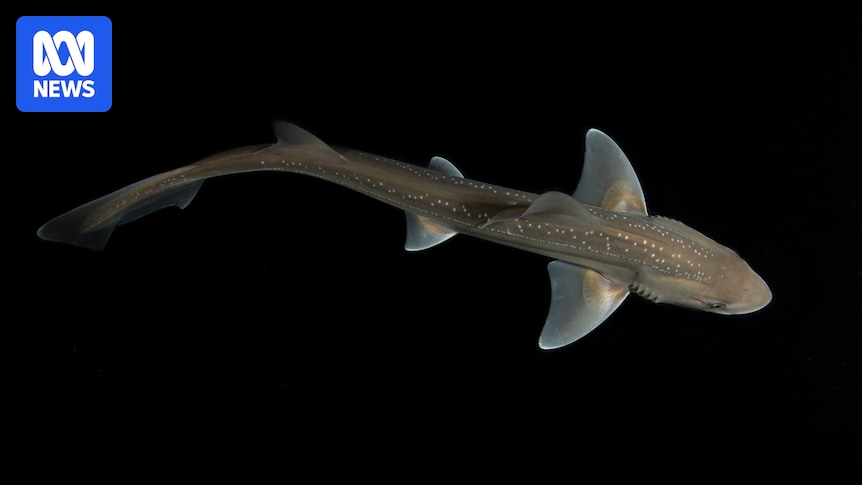
A common species of shark in New Zealand has been recorded making clicking sounds underwater. Researchers hypothesize that the noise comes from the spotted estuary smooth-hound forcefully snapping its teeth. Further studies are required to understand why the shark makes the sound. Scientists are also keen to investigate if there could be more shark species making underwater noises. The sea is a symphony of sounds from whale song to the guttural thumps and groans of a fish drumming an internal organ. But marine scientists have long thought that sharks, a group containing more than 500 species, did not intentionally make noise underwater. Some fish contract muscles to vibrate their swim bladder, a gas-filled body part that regulates buoyancy, to communicate but sharks do not possess the same organ. Generally, sharks, as predators, are built for silence with their skin textured in a way that reduces sound created by their movements. But a new study suggests a common New Zealand species could be making sounds on purpose, with its teeth.
Discovering Shark Sounds Underwater
This discovery opens up new avenues for research into marine acoustics, especially concerning sharks and rays. The initial findings suggesting that the spotted estuary smooth-hound might intentionally produce sounds challenge the long-standing notion of sharks as silent predators. This could lead to broader investigations into whether other shark species also participate in such acoustic activities. Scientists like Dr. Nieder and Dr. Fetterplace are advocating for focused studies to understand the context and purpose of these sounds, whether they serve as a defense mechanism, a way to startle predators, or potentially a form of communication. As researchers continue to unravel the mysteries of marine life, the exploration of sound production among elasmobranchs is expected to reveal deeper insights into their behaviors, emphasizing the importance of respectful observation and research in uncovering these underwater phenomena.
Shark Species and Sound Production Mechanisms
The clicking behaviour has been described in the new study as the first documented case of a shark deliberately making sound underwater. Australian swell sharks and draughtboard sharks have been heard barking like a dog when taken out of the water. Draughtboard sharks inflate their stomach to look bigger, but when this is done out of the ocean they can sound like a barking dog. This is thought to be from a release of air because of a defence mechanism, where they puff up in size when threatened. But when the draughtboard shark does the same action while submerged in natural settings, no sound is produced.
Sound Production in Sharks: An Emerging Area of Study
Dr Nieder’s findings suggest that the smooth-hound shark’s clicking could be a nuanced form of communication or a defense mechanism. This revelation challenges the traditional view of sharks as silent hunters and opens up new avenues for research into the acoustic behaviors of marine animals. Additionally, understanding the significance of such sounds in sharks could deepen researchers’ comprehension of the species’ interactions with each other and their environment. The exploration of these clicking noises might shed light on the broader spectrum of underwater acoustics, encompassing a variety of species beyond just sharks, and may reveal previously unknown aspects of marine life communication.
Future Research and Implications
In conclusion, the discovery of the spotted estuary smooth-hound’s clicking behaviour opens new avenues for research into shark acoustics and challenges previous assumptions about shark silence. As scientists continue to explore this intriguing phenomenon, the pursuit of understanding why and how these sounds are produced sheds light on the broader complexities of marine life. The possibility of finding more sound-producing elasmobranchs emphasizes the vastness of what remains to be discovered beneath the ocean’s surface. This evolving field invites ongoing curiosity and encourages respectful interaction with marine creatures, highlighting the delicate balance between investigation and conservation.